- Bill Gatton Chevy Show
- Carter Stanley Interview - 1966
- How Far To Little Rock? - Search live shows
- Jim Kent's film 'Ralph Stanley's Bluegrass Festival'
- New WCYB Recording
- Pound Va. 1972 - Video
- Replica Rebel T-Shirt
- R.I.P. Ralph
- Roy Lee Centers Last Show
- Song & Memory Books
- Stanley Brothers - WCYB Acetate
- Stanley Standard - Carter Stanley Memorial Issue
- Suwannee River Jamboree
- Up In The Cloud - 1957-62



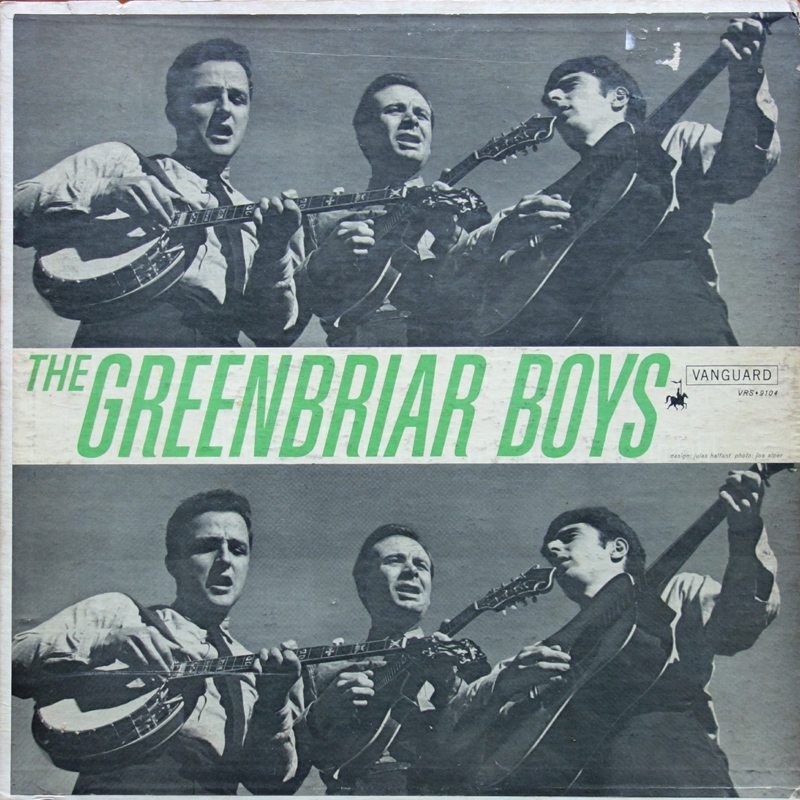
The Greenbriar Boys - The Greenbriar Boys
(Vanguard VRS-9104) May 1962
Average Album Rating: 0
(Total votes 0)
- 5 star
- 4 star
- 3 star
- 2 star
- 1 star
This LP is included here due to Jack Cooke's involvement playing bass on the album, which I believe came about after a request from Ralph Rinzler.
The Greenbriar Boys were a Northern urban bluegrass band, who had their origins in the Sunday afternoon folk music jam sessions in Washington Square Park, Greenwich Village. They were formed in 1958 by John Herald, Bob Yellin and Eric Weissberg, and by the time of their eponymous LP in 1962, Eric had been replaced by Ralph Rinzler on mandolin.
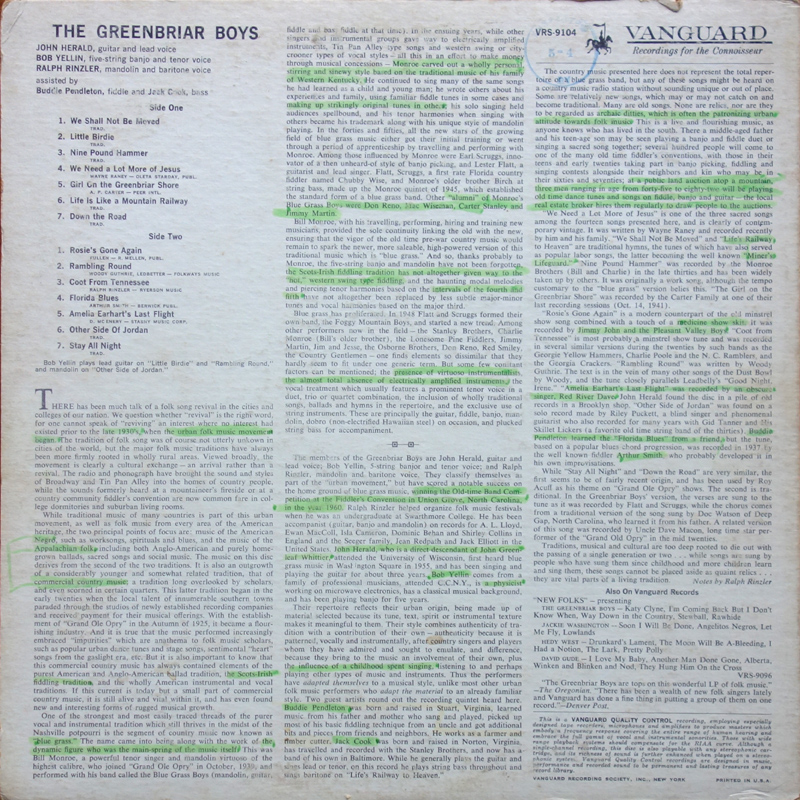
From Rinzler's liner notes: "They classify themselves as part of the 'urban movement', but have scored a noteable success on the home ground of blue grass music, winning the Old-time Band Competition at the Fiddler's Convention in Union Grove, North Carolina, in the year 1960...."
"...Their repertoire reflects their urban origin, being made up of material selected because its tune, text, spirit or instrumental texture makes it meaningful to them. Their style combines authenticity of tradition with a contribution of their own - authenticity because it is patterned, vocally and instrumentally, after country singers and players whom they have admired and sought to emulate, and difference, because they bring to the music an involvement of their own, plus the influence of a childhood spent singing, listening to and perhaps playing other types of music and instruments. Thus the performers had adapted themselves to a musical style, unlike most other urban folk music performers who adapt the material to an already familar style."
The album includes fourteen tracks drawn from various sources. The folk influence is in evidence in the opening track We Shall Not Be Moved, a popular protest song of the Civil rights movement, which I doubt has been recorded by many bluegrass acts. Incidentally the liner notes mention that John Herald was a direct descendent of the poet & anti-slavery campaigner John Greenleaf Whittier.
A couple of the tracks include variations from 'regular' bluegrass performances. eg. Down The Road which deviates from Flatt & Scruggs version with a repeated phrase "Down The Road, Down The Road, I've Got a Sugar Baby Down The Road"; and Little Birdie which incorporate a few lines drawn from A.P. Carter's Single Girl, Married Girl, but with the gender swapped over, e.g. "For a married man sees trouble, and a single boy sees none, I intend to live single, until my life here is done". This track is also performed without banjo, with Bob Yellin switching to lead guitar.
Two of the songs appear to be the first bluegrass versions to be recorded. Amelia Earhart's Last Flight is I believe the first bluegrass rendition of the tune. It was first recorded by it's composer 'Red River Dave' (Dave McEnery) in 1941, and the Greenbriar Boys' version pre-dates the Country Gents recording by 6 years (as Amelia Earhart). According to the liner notes, John Herald found the song in a pile of old records in a Brooklyn record shop.
Girl On The Greenbriar Shore is also possibly the first bluegrass rendition of the Carter Family's song. One of A.P. Carter's lesser known tunes, it was recorded by them in their last 1941 sessions and first covered by Tom Paley in 1953.[1] Ralph Stanley, of course, recorded it in his 2002 CD Ralph Stanley, and The Hotmud Family also cut a version in 1975.
Three of the songs are quite amusing:- the rendition of Wayne Raney's We Need A Lot More Jesus (And A Lot Less Rock 'n' Roll), seems to be somewhat tongue-in-cheek; the novelty song Rosie's Gone Again which is quite faithful to the original by Jimmie Fuller and recorded by him as 'Jimmie John with Knox County Ramblers and Hillbilly Millie' / Jimmie John with The Pleasant Valley Boys' in 1957; and Coot From Tennessee which although credited to Ralph Rinzler on the LP has its roots in a song called I'm Goin' To Live Anyhow Till I Die, published in 1891 and credited to Shepard N. Edmonds. As Rinzler's liner notes acknowledge, the song "...is most probably a minstrel show tune and was recorded in several similar versions during the twenties by such bands as the Georgia Yellow Hammers, Charlie Poole and the N.C. Ramblers, and the Georgia Crackers". Lyrically the Greenbriar's version seems close to Charlie Poole's Coon From Tennessee with a slight change to the title to make it palatable.[2]
Stay All Night borrows some of the melody / fiddle work from Bill Monroe's Uncle Pen, and guest fiddler Buddy Pendleton also worked with Bill Monroe in 1962 / 63[3]. Buddy had hooked up with John Herald and Bob Yellin at the 1961 '37th Old Time Fiddlers Convention' at Union Grove, North Carolina, performing as The Lonesome Strangers. One track from the event, Billy In The Lowground, subsequently appeared on LP and on the Classic Bluegrass CD. Buddy who was from Stuart, Virginia, moved to New York briefly to play and record with the Greenbriar Boys.[4]
Buddy is also featured prominently on the version of Arthur Smith's Florida Blues.
Life Is Like A Mountain Railway (aka Life's Railway To Heaven) features 4-part harmony with Jack Cooke singing baritone. Several artists have recorded this song, including Bill Monroe, but Ralph Rinzler's liner notes point to 'a popular labor song' Miner's Lifeguard as it's source.
Other tracks include a version of Nine Pound Hammer, possibly influenced by the Monroe Bros; Woody Guthrie's Rambling Round; and Riley Puckett' Other Side Of Jordan.
I doubt many Stanley fans will want to pick up the LP purely on the basis of Jack Cooke's involvement, but the Greenbriar Boys are well worth checking out.
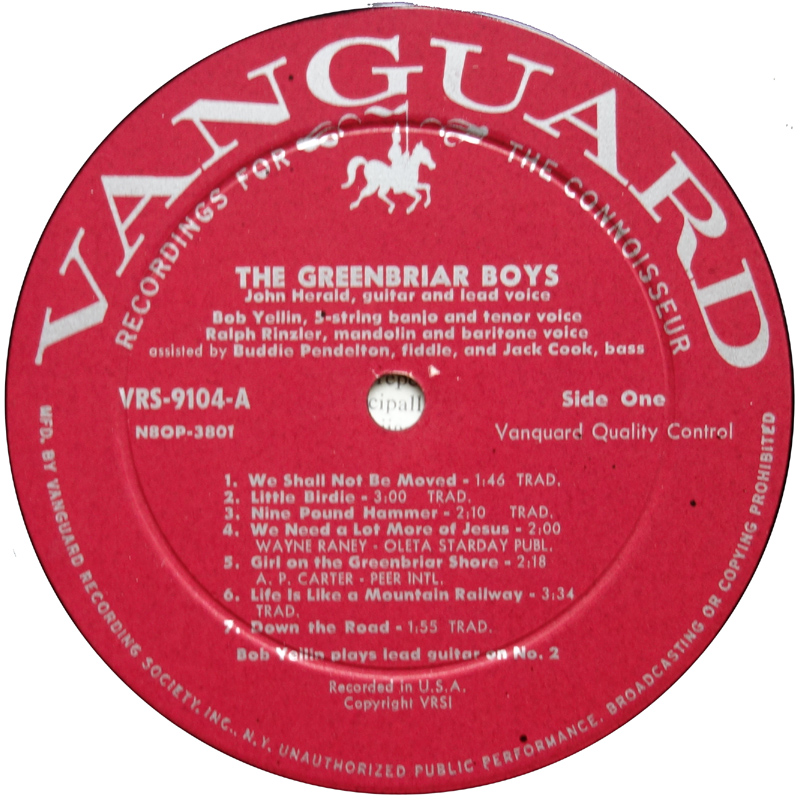
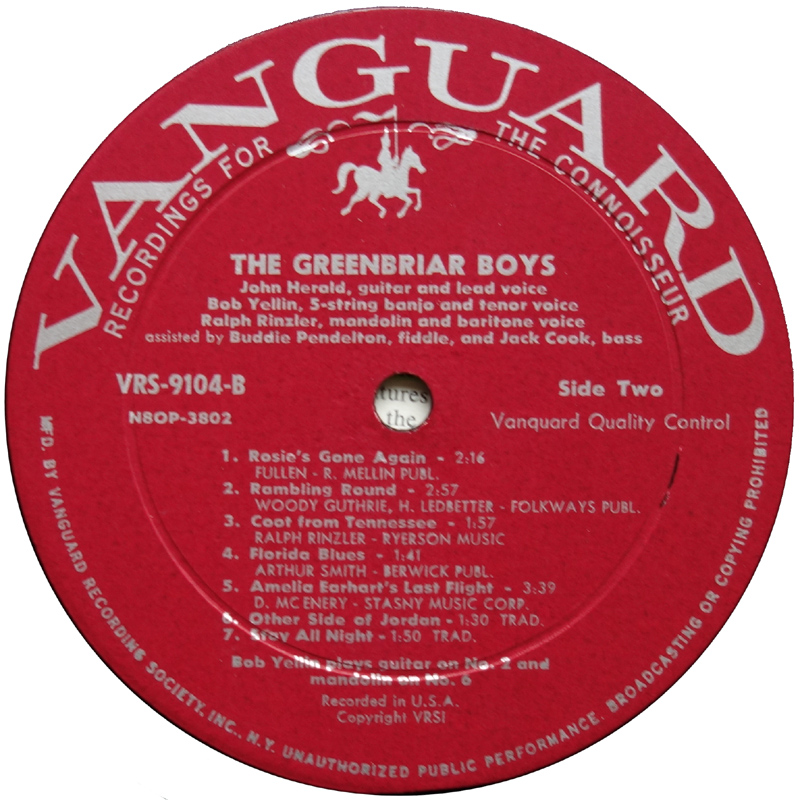
- John Herald: guitar, lead vocals
- Ralph Rinzler: mandolin, baritone vocals
- Bob Yellin: banjo, tenor vocals
- Buddy Pendleton: fiddle
- Jack Cooke: bass (a)
NB: (a) also baritone vocal on Life Is Like A Mountain Railroad.
| Track: |
Title: |
Time: |
Date: |
Original Release: |
|||||||||||||||||
|---|---|---|---|---|---|---|---|---|---|---|---|---|---|---|---|---|---|---|---|---|---|
| A-1 |
We Shall Not Be Moved |
01:46 |
1962 |
The Greenbriar Boys |
|||||||||||||||||
| P.D. |
|||||||||||||||||||||
| Gtr / Ld Vcl | Bjo / Ld Vcl | Mnd | Bs | ||||||||||||||||||
| John Herald |
Bob Yellin |
Ralph Rinzler |
Jack Cooke |
|
|||||||||||||||||
| A-2 |
Little Birdie |
03:00 |
1962 |
The Greenbriar Boys |
|||||||||||||||||
| P.D. |
|||||||||||||||||||||
| P.D. |
|||||||||||||||||||||
| Gtr / Ld Vcl | Ld Gtr | Mnd | Bs | ||||||||||||||||||
| John Herald |
Bob Yellin |
Ralph Rinzler |
Jack Cooke |
|
|||||||||||||||||
| A-3 |
Nine Pound Hammer |
02:10 |
1962 |
The Greenbriar Boys |
|||||||||||||||||
| Gtr / Ld Vcl | Hr Vcl / Bjo | Mnd | Fid | Bs | |||||||||||||||||
| John Herald |
Bob Yellin |
Ralph Rinzler |
Buddy Pendleton |
Jack Cooke |
|||||||||||||||||
| A-4 |
We Need A Lot More Jesus |
02:00 |
1962 |
The Greenbriar Boys |
|||||||||||||||||
| Wayne Raney |
|||||||||||||||||||||
| Gtr / Ld Vcl | Bjo / Tn Vcl | Mnd / Bt Vcl | Bs | ||||||||||||||||||
| John Herald |
Bob Yellin |
Ralph Rinzler |
Jack Cooke |
|
|||||||||||||||||
| A-5 |
Girl On The Greenbriar Shore |
02:18 |
1962 |
The Greenbriar Boys |
|||||||||||||||||
| A.P. Carter |
|||||||||||||||||||||
| Gtr / Ld Vcl | Bjo / Tn Vcl | Mnd / Bt Vcl | Bs | ||||||||||||||||||
| John Herald |
Bob Yellin |
Ralph Rinzler |
Jack Cooke |
|
|||||||||||||||||
| A-6 |
Life Is Like A Mountain Railway |
03:34 |
1962 |
The Greenbriar Boys |
|||||||||||||||||
| A.P. Carter |
|||||||||||||||||||||
| Gtr / Ld Vcl | Bjo / Tn Vcl | Mnd / Bs Vcl | Bs / Bt Vcl | ||||||||||||||||||
| John Herald |
Bob Yellin |
Ralph Rinzler |
Jack Cooke |
|
|||||||||||||||||
| A-7 |
Down The Road |
01:55 |
1962 |
The Greenbriar Boys |
|||||||||||||||||
| P.D. |
|||||||||||||||||||||
| Gtr / Ld Vcl | Bjo / Tn Vcl | Mnd / Bs Vcl | Fid | Bs | |||||||||||||||||
| John Herald |
Bob Yellin |
Ralph Rinzler |
Buddy Pendleton |
Jack Cooke |
|||||||||||||||||
| B-1 |
Rosie's Gone Again |
02:16 |
1962 |
The Greenbriar Boys |
|||||||||||||||||
| Jim Fullen |
|||||||||||||||||||||
| Gtr / Ld Vcl | Bjo / Vcl | Mnd / Vcl | Fid | Bs | |||||||||||||||||
| John Herald |
Bob Yellin |
Ralph Rinzler |
Buddy Pendleton |
Jack Cooke |
|||||||||||||||||
| B-2 |
Rambling Round |
02:57 |
1962 |
The Greenbriar Boys |
|||||||||||||||||
| Woody Guthrie / Hughie Ledbetter |
|||||||||||||||||||||
| Gtr / Ld Vcl | Gtr | Mnd | Bs | ||||||||||||||||||
| John Herald |
Bob Yellin |
Ralph Rinzler |
Jack Cooke |
|
|||||||||||||||||
| B-3 |
Coot From Tennessee |
01:57 |
1962 |
The Greenbriar Boys |
|||||||||||||||||
| Ralph Rinzler |
|||||||||||||||||||||
| Gtr | Bjo | Mnd / Ld Vcl | Bs | ||||||||||||||||||
| John Herald |
Bob Yellin |
Ralph Rinzler |
Jack Cooke |
|
|||||||||||||||||
| B-4 |
Florida Blues |
01:41 |
1962 |
The Greenbriar Boys |
|||||||||||||||||
| Arthur Smith |
|||||||||||||||||||||
| Gtr | Bjo | Mnd | Fid | Bs | |||||||||||||||||
| John Herald |
Bob Yellin |
Ralph Rinzler |
Buddy Pendleton |
Jack Cooke |
|||||||||||||||||
| B-5 |
Amelia Earhart's Last Flight |
03:39 |
1962 |
The Greenbriar Boys |
|||||||||||||||||
| D. McEnery |
|||||||||||||||||||||
| Gtr / Ld Vcl | Bjo / Ld Vcl | Mnd / Bs Vcl | Bs | ||||||||||||||||||
| John Herald |
Bob Yellin |
Ralph Rinzler |
Jack Cooke |
|
|||||||||||||||||
| B-6 |
Other Side Of Jordan |
01:30 |
1962 |
The Greenbriar Boys |
|||||||||||||||||
| Arthur Smith |
|||||||||||||||||||||
| Gtr / Ld Vcl | Mnd | Mnd | Fid | Bs | |||||||||||||||||
| John Herald |
Bob Yellin |
Ralph Rinzler |
Buddy Pendleton |
Jack Cooke |
|||||||||||||||||
| B-7 |
Stay All Night |
01:50 |
1962 |
The Greenbriar Boys |
|||||||||||||||||
| D. McEnery |
|||||||||||||||||||||
| Gtr / Ld Vcl | Bjo | Mnd | Bs | ||||||||||||||||||
| John Herald |
Bob Yellin |
Ralph Rinzler |
Jack Cooke |
|
|||||||||||||||||
Other artwork / related images:
[1] Tom Paley - "Folk Songs from the Southern Appalachian Mountains" 10" (Elektra EKL-12) Nov 1953.
[2] https://mudcat.org/thread.cfm?threadid=22794
[3] Neil V. Rosenberg and Charles K. Wolf "The Music Of Bill Monroe" p.126 & p.150
[4] 'The 37th Old Time Fiddlers Convention At Union Grove, North Carolina' (Folkways 2434) 1962. Referenced in the liner notes to Classic Bluegrass - From Smithsonian Folkways (Smithsonian Folkways SFWCD-40092) 2002.

